
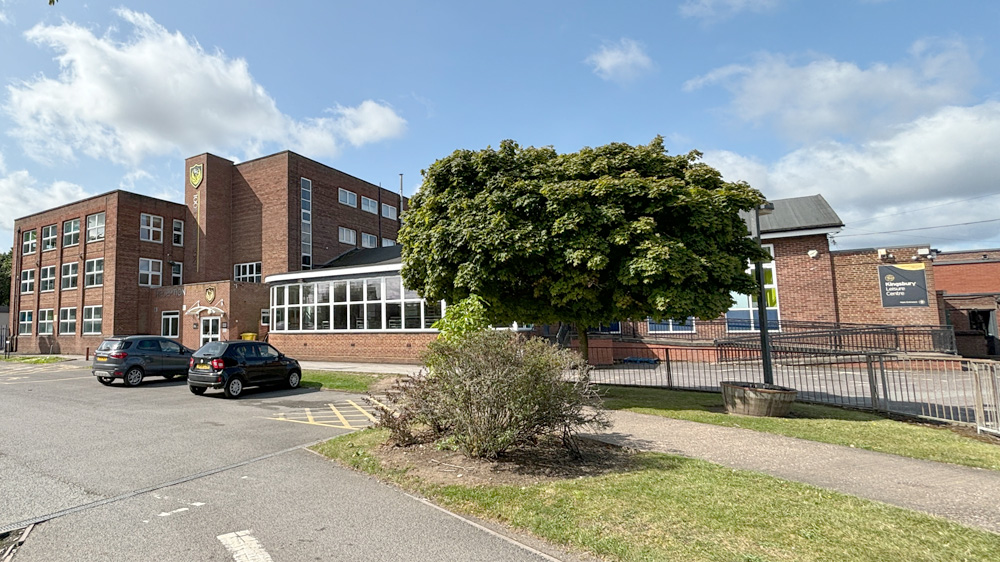
Kingsbury Swimming Pool Refurbishment
Kingsbury School is a well-established secondary school situated in Warwickshire. The campus operates as a shared site, combining both educational facilities for the school and public amenities through its adjoining leisure centre. As part of the development project, the works focused on the refurbishment of the swimming pool, which was carried out by specialist contractors to modernise the facility and bring it up to the highest standard. In addition, the project involved a carefully planned internal reconfiguration of the building, designed to improve circulation and create a clearer separation between the school’s educational spaces and the leisure centre. This not only enhanced functionality but also provided an improved experience for both pupils and the wider community.
The works were limited to structural elements and were carefully coordinated with the proposed architectural layouts prepared by Gleeds. The project began with a site survey to establish the existing structural system, as no record drawings were available. Plan drawings were drafted to illustrate the observed and, where necessary, assumed structural system. These were then used to coordinate with the architect in shaping the proposed layout. Millward subsequently contributed to the design development and the production of detailed drawings to support the proposed works. After the detailed design stage, Millward was commissioned directly by the Contractor to provide assistance with construction queries, temporary works design, and the design and detailing of steel-to-steel connections for fabrication. A strong working relationship was established between Millward and Petric Contractors during this project, and the collaboration created a solid foundation for future projects together. The scope of works included the installation of new partition walls, the removal of structural walls (with the introduction of steelwork to support the roof structure), the formation of new openings in structural walls, and the infilling of existing openings.
Added Value
Due to the absence of record or historic information, many assumptions had to be made during the design stage. This required swift responses from Millward whenever intrusive works revealed unexpected conditions. We reacted quickly, attending site alongside all parties to resolve communication issues and ensure a strong on-the-ground presence — a trait supported by Millward. The changing rooms had clearly undergone various modifications over the years, and no single structural system was evident. Instead, there was a combination of cast in-situ concrete slabs, what appeared to be precast concrete planks, brick walls, and thermalite block walls. This created a particular challenge, as each detail was bespoke with unique loading scenarios and constraints that needed to be addressed. Through innovation and close collaboration on site, the team explored several potential approaches before proposing the most efficient and compatible solutions. Each option was carefully evaluated in terms of product lead times, constructability, sustainability and waste, as well as overall cost. The temporary works also presented challenges, primarily due to the restricted access and limited space within the changing rooms, as well as the need to manoeuvre corners and Acrow props around the steel beams. By working closely with the Contractor on site, the props were positioned in locations that supported the safe erection of the steelwork. Additional consideration was also given to an existing services trench, ensuring the props were placed at a suitable distance to avoid any interference.